
You must be logged in to post a review.
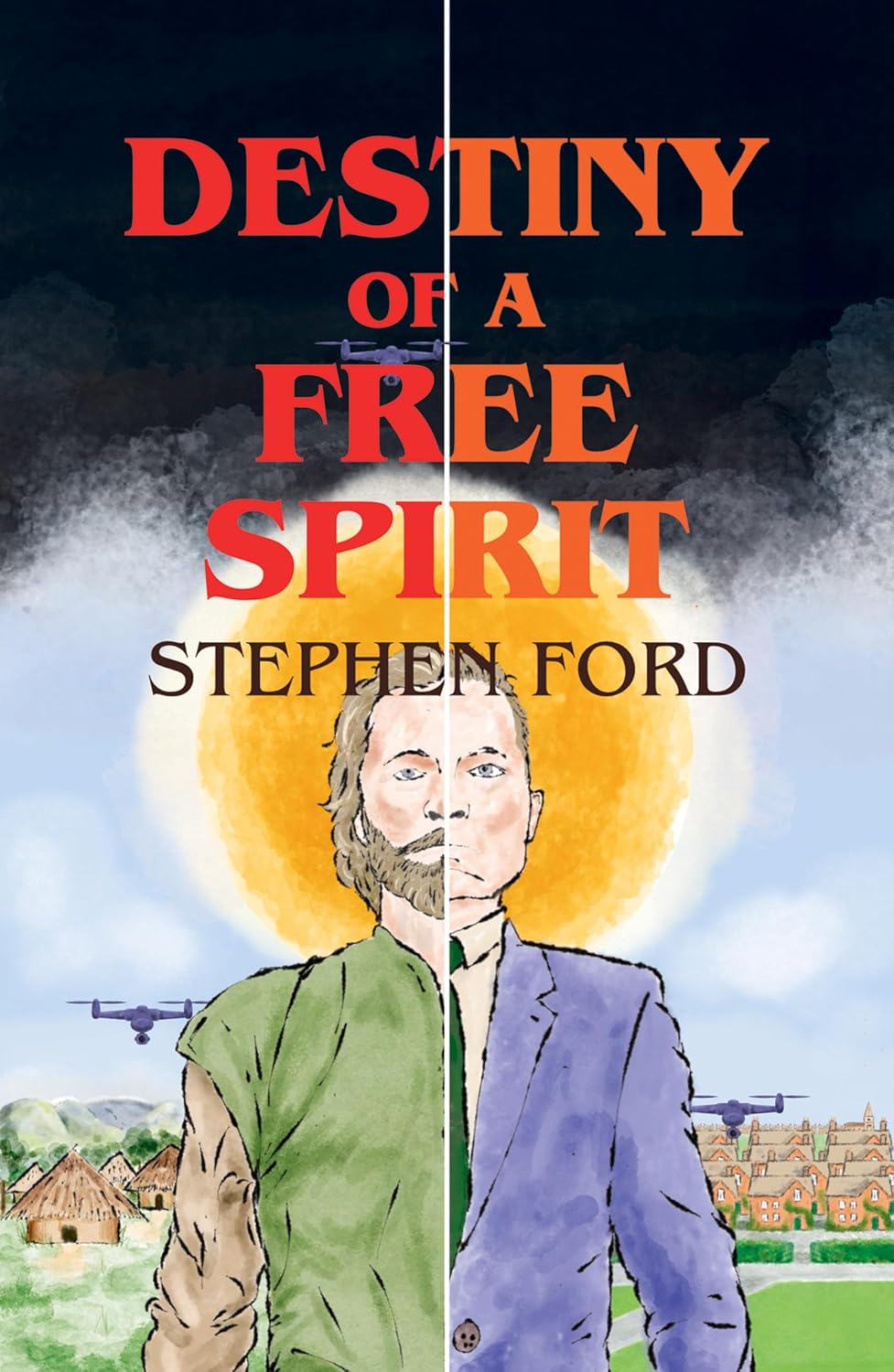
Destiny of a Free Spirit
We rated this book:

$16.00
Stephen Ford’s Destiny of a Free Spirit is a thought-provoking debut that wraps a compelling, character-driven narrative inside a rich, post-apocalyptic science fiction framework. I often appreciate novels that combine heart-pounding action with genuine intellectual depth, and Ford successfully delivers on both fronts. The central conceit of the novel is the division of the world, following a catastrophic “Cataclysm”, into two distinct realms: Economica, the remnants of structured, technology-dependent civilization, and Ecologia, a vast, untouched nature reserve where a pre-industrial “Wild Folk” community lives in devotion to the Earth Mother, Gaia.
The narrative follows Peter, a man from Economica who has discovered a secret subterranean portal, allowing him to travel illegally between the worlds. Ford immediately plunges the reader into the primal dangers of Ecologia, beginning with a visceral, tense battle against a sabre-toothed cat that threatens the community Peter has found a home with. This opening is sharp and gripping, but the novel’s real strength lies in the quieter, introspective moments that follow, where Peter grapples with his dual existence.
The novel is rich in contrasting themes, which elevate it beyond simple action-adventure:
Nature vs. Civilization and Environmentalism: This is the primary conflict. Ecologia represents the True Natural Path, while Economica embodies the technological arrogance and potential for self-destruction—the domain of Vulcan, the Lord of Destruction. The book is a powerful ecological parable, contrasting the soul-enriching hardship of the wild with the artificiality of a structured, sanitized modern world.
Governance, Control, and AI: Governing both realms is The Commission, which the Wild Folk revere as the deity Commissum. Ford subtly explores dystopian control, suggesting that this global artificial intelligence manages both populations: withholding technological knowledge from the inhabitants of Economica and literally marking the people and large animals of Ecologia with what Peter suspects are tracking devices for “protection”.
Identity and Destiny: Peter’s journey is fundamentally a search for where he belongs. As a man who is clearly intellectual but also thrives in the wilderness, he must choose his Destiny: the comfort and business prospects of his life in Economica, or the rugged freedom and emotional connection he has found in Ecologia, particularly with a young woman named Freya. The chapters titled “Mental Health” and “Outdoor Recreation” further ground this internal struggle, positing the physical and spiritual benefits of the wild world as a cure for the disaffection of the “civilized” one.
Destiny of a Free Spirit is highly recommended for several distinct groups of readers. It will appeal to fans of post-apocalyptic and ecological science fiction who enjoyed the world-building of books like A Canticle for Leibowitz or classic survivalist narratives. Its blend of high-concept AI governance and primitive living will resonate with anyone interested in themes of technological critique and deep ecology. Lastly, readers who appreciate a novel where the protagonist is internally torn between two loves, the ambitious career path and the simple life, exemplified by his choice between two different women, Celia and Freya, will find Peter’s quest for his true self deeply engaging. It’s an intelligent, absorbing read that asks a fundamental question: What is the true cost of civilization, and what does it mean to be truly free?
| Author | Stephen Ford |
|---|---|
| Star Count | 4/5 |
| Format | Trade |
| Page Count | 298 pages |
| Publisher | Cinnamon Press |
| Publish Date | 15-Feb-2015 |
| ISBN | 9781788649568 |
| Bookshop.org | Buy this Book |
| Issue | December 2025 |
| Category | Science Fiction & Fantasy |
| Share |


Reviews
There are no reviews yet.